Category: Buying Guides

  • A first board game, at four, six and eight

    A first board game, at four, six and eight

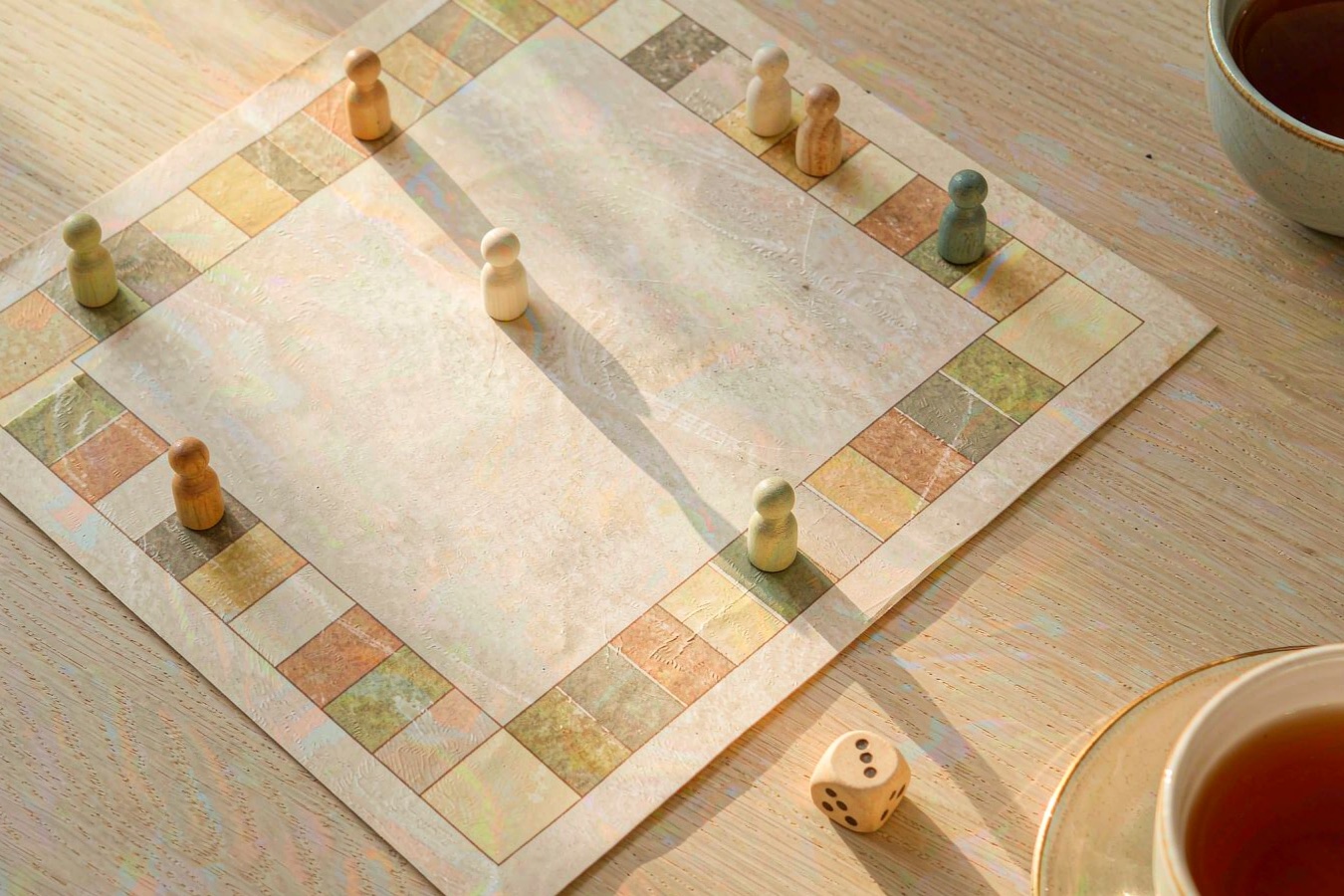
    Most first board games fail for the same three reasons: they require reading, they require waiting, or they require losing gracefully. A four-year-old can usually manage one of those. Almost none can manage all three at once, and the game that asks for all three gets put back on the shelf and stays there.

    The fix is not to find a better game. It is to match the game to what the child can actually do this year, which changes faster than most people expect.

    Four years old: turn-taking is the whole game

    At four, the interesting skill is not strategy. It is the social mechanics: waiting while someone else goes, handing over the dice, not grabbing. That is genuinely hard and it is the actual content of the game.

    What a four-year-old can do: match colours and pictures, roll and move, hand things to other people with prompting.

    What they cannot reliably do: read, plan two moves ahead, or lose without a strong reaction.

    What works: memory and matching games, very short rounds of ten minutes or less, and cooperative games where the players win or lose together. A cooperative game removes the specific pain of this age, which is watching someone else win.

    Memo Games is a good illustration of the right shape for this age: matching, no reading, and a round short enough that attention does not have to be negotiated.

    Six years old: rules become interesting

    Around six, the appeal shifts from the pieces to the system. Rules stop being obstacles and start being the point. A six-year-old can hold two interacting rules in mind at once and will happily explain them to an adult who is pretending not to understand.

    What works: set collection, simple drafting, games where a decision now has a visible consequence in three turns. Also games with a bit of luck, because luck keeps a younger sibling competitive.

    What to skip: games with a long rules explanation. If it takes more than ten minutes to teach, it will not get played twice, no matter how good it is.

    Eight years old: systems and bluffing

    At eight the pleasure is in the meta-layer: knowing what the other player is likely to do, holding a card back, spotting that someone is collecting a particular colour. Games with hidden information start to work properly, because the child can now hold a model of another person’s mind.

    What works: drafting, light area control, cooperative games with distinct roles, anything with a bluff.

    This is also the age where losing becomes tolerable, provided it is not humiliating. A game that lets a losing player stay in the running until near the end will get played far more often than one that eliminates people early.

    Three things that predict whether it gets played

    1. Ten minutes of rules, maximum. Longer than that and the game night ends before the game starts.
    2. Everyone does something on every turn. Elimination and long waits between turns are the two fastest ways to lose a young player.
    3. It ends while people still want more. A game that overstays becomes a chore, and chores do not get requested again.

    Cooperative first, competitive later

    If you are buying one game for a household with mixed ages, buy cooperative. The youngest player can contribute, nobody has to be the loser, and the social pressure that makes competitive games difficult at four simply is not there.

    Add competitive games once turn-taking is solid, usually around six. That is when winning starts to be fun rather than frightening.

    A note on licensed games

    Games tied to a film or series usually spend their budget on the licence rather than the rules. There are exceptions, and a child who loves the characters will get more out of a mediocre themed game than a good abstract one. But if you are choosing blind, the plain box with a well-known designer name is the safer bet.

    If you want something with a bit more machinery in it, Snap Circuits Game Play sits at the boundary between board game and building kit, which suits the eight-year-old who has started to find ordinary board games too passive.
  • Blocks or puzzles? They train opposite skills

    Blocks or puzzles? They train opposite skills

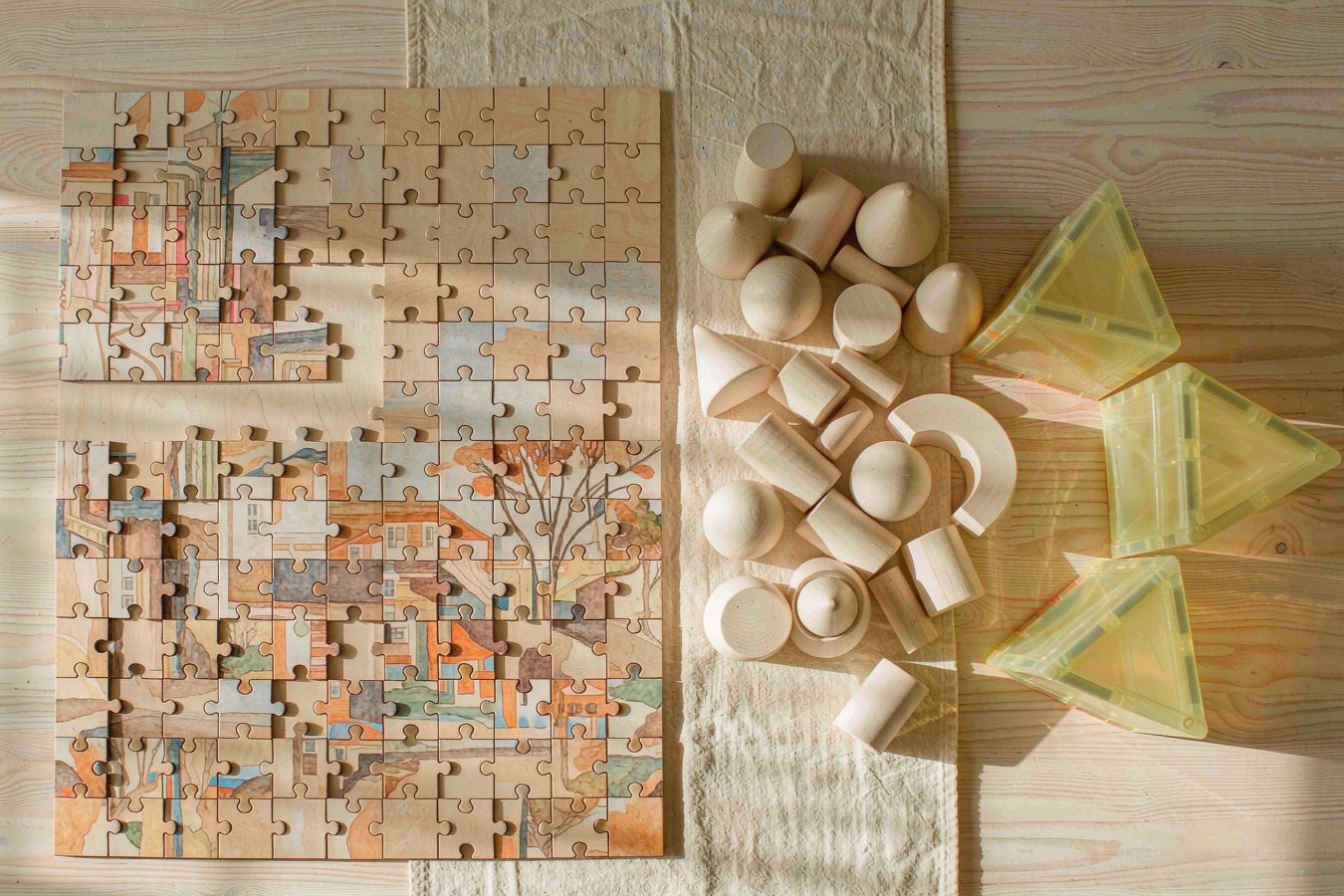
    Walk down any toy aisle and blocks and puzzles are shelved together under the same promise: spatial reasoning, problem solving, fine motor skills. All true. But they ask the brain to do opposite things, and mixing them up is why some kids take to one and refuse the other.

    Two kinds of thinking

    A puzzle is convergent. There is one correct answer, the pieces either fit or they do not, and the feedback arrives instantly and without ambiguity. You cannot negotiate with a jigsaw.

    Blocks are divergent. There is no answer key. The only feedback comes from physics, and physics does not care whether the tower looks good.

    A puzzle teaches you to find the answer. Blocks teach you that there might not be one.

    That difference is not cosmetic. It maps onto two different relationships with being wrong.

    What puzzles actually teach

    The value of a puzzle is not the finished picture. It is the loop:

    • Notice something does not fit
    • Form a hypothesis about why
    • Test it
    • Adjust

    Run that loop forty times and you have practised tolerating being wrong at a low cost, which is a skill that transfers to almost everything. Puzzles also train scanning and edge detection, the habit of sorting by shape and colour before trying to place anything.

    The other thing puzzles give is a reliable win. There is a moment when the last piece goes in and it is unambiguous. For a child who is currently failing at something else, that matters more than the spatial reasoning.

    What blocks teach

    Blocks do not teach you to find the answer, because there isn’t one. They teach structural thinking: what bears load, how far something can span before it sags, why the wide base matters. They also teach the idea that multiple solutions can be valid, which is harder to demonstrate and harder to test.

    There is no completion state with blocks. That is a feature. A child who builds for twenty minutes and then knocks it down has not failed to finish, they have run the experiment.

    Which one your kid needs

    The choice is less about age than about how the child currently handles frustration.

    The child who quits the moment it gets hard. Start with puzzles of 30 to 60 pieces, large format, floor size. Big pieces mean visible progress. The goal is to get through the loop enough times that being wrong stops feeling like a verdict.

    The child who finishes everything immediately and asks for more. Move up in piece count, or move to blocks. A puzzle they can finish in one sitting has stopped offering the loop.

    The child who builds one thing and never varies it. More blocks, and fewer speciality pieces. If half the set is a single custom-moulded wall panel, there is only one thing to build with it.

    The child who will not touch either. Try magnetic tiles. They hold themselves together, so the failure mode is gentler, and three year olds can succeed on the first attempt.

    If you want a starting point in each camp, the Giant Floor Puzzles set of 4 covers the puzzle side without asking for much patience, and the Magna-Tiles Coral Reef set does the same for building.

    The building-toy landscape, briefly

    Wooden blocks. Best from about one to four years. No wrong way to use them, heavy enough to feel like real objects, and they survive being thrown. The limit is that they only stack, so the structural vocabulary tops out early.

    Magnetic tiles. Roughly three and up. The fastest path to success of any construction toy, and unusually good for geometric intuition, since the shapes have to close. Expensive per piece, and the magnets demand supervision with younger siblings.

    Interlocking bricks. Five and up. Come with instructions, and the pleasure is partly the manual, partly the moment the mechanism works. The downside is that sets are increasingly single-purpose kits rather than building material.

    Planks and connectors. Four and up. Open-ended like blocks but with real engineering constraints, so they reward iteration instead of luck.

    Buy one set that is big enough

    The most common purchasing mistake is buying four small sets instead of one large one. A 40-piece set of every category means you can build something the size of a shoebox in four different ways. One 200-piece set means you can build something the size of the child, which is the thing they actually want to do.

    Depth of one material beats breadth of four.

  • What to buy at every age, and what to skip

    What to buy at every age, and what to skip

    The number on the box is a legal minimum, not a recommendation. It tells you when a toy stops being a hazard for a child of that age. It says nothing about whether your kid will want it, and it definitely says nothing about whether they will still want it in three weeks.

    That gap is where most toy buying goes wrong. A four-year-old gets a set rated 8+, loses interest in an afternoon, and the conclusion drawn is that the child is difficult. Usually the toy was simply aimed at a different stage.

    What follows is what tends to hold attention at each stage, what to skip, and why.

    0–12 months: the world as an experiment

    At this age the toy is a physics test. Drop it, it falls. Squeeze it, it makes noise. The point is not to teach anything specific. The point is to let them confirm, over and over, that the world responds to them.

    What works: high-contrast fabric, crinkle paper, a couple of chunky wooden pieces light enough to lift, anything that can be safely mouthed. One object at a time is plenty. A baby surrounded by six toys is not being enriched, they are being interrupted.

    What to skip: battery toys that perform while the baby watches. These invert the relationship. The toy does the playing and the baby becomes the audience, which is the opposite of what this stage is about.

    The practical check for anything this age: if it fits through a toilet paper tube, it is a choking risk.

    1–2 years: in, out, and on top

    The obsession here is containment. Putting things into containers, taking them out again, stacking, and knocking down. It looks pointless. It is the foundation of object permanence, cause and effect, and eventually sorting.

    A bucket and four blocks will outperform a light-up activity table most days, and it is not close.

    What works: nesting and stacking toys, first shape sorters with forgiving tolerances, push-along toys that stay upright when shoved, board books with flaps sturdy enough to be yanked.

    Buy fewer pieces and bigger ones. Small parts are both a choking risk and a losing battle against the vacuum cleaner.

    For that age bracket a chunky Wooden School Bus or the Tender Leaf Farm Playset tends to earn its shelf space, mainly because nothing in it can be swallowed and everything in it can be dropped.

    3–5 years: the pretend peak

    This is the window where a cardboard box becomes a spaceship and stays one for an hour. Symbolic play is doing real work: rehearsing social situations, testing language, sequencing events, trying on being someone else.

    This is also the age where the widest range of toys becomes viable at once, which makes it the easiest age to overbuy for.

    What works: dress-up, play food, doctor and vet kits, dollhouses, simple figure sets, and building toys that come without instructions. Anything with a wrong way to use it is doing its job.

    A doctor kit is a good test case. It gets used for doctoring, then for vet visits, then for running a shop, and eventually for a hospital that treats dinosaurs. That range is the entire point.

    What to skip: heavily scripted toys tied to a single film or series. They usually encode one correct play pattern, kids exhaust it in a week, and then you own a plastic monument.

    6–8 years: rules with consequences

    Play turns competitive and rule-bound around here. Losing becomes a real event that has to be learned to handle. Games with genuine strategy start to land, and building sets with an actual mechanism inside them, gears or motors or something that bears load, become satisfying in a new way.

    What works: board games that punish bad decisions more than bad luck, mid-size building sets, kits with a finished object at the end, decent sports equipment, magic sets, anything with a skill curve.

    This is the age to stop buying “toys” and start buying equipment.

    A set like the Melissa & Doug Big Rig Truck set sits right at that boundary. It is a toy truck, but the assembly is the interesting part, and the finished object survives being played with afterwards.

    9–12 years: skill and identity

    Older kids want things that prove something, either that they can build it, solve it, or that it reflects who they are. The category that works is closer to tools than toys.

    What works: complex builds, electronics and coding kits, model kits, strategy games with long tails, art supplies that are not the children’s version, proper sports gear.

    What to skip: anything that talks down. A ten-year-old can spot a product designed for a seven-year-old with a bigger logo on the box, and the contempt is instant and permanent.

    Three things worth skipping at any age

    1. Toys with one button. A single interaction has a very short half-life, no matter how good the sound effect is.
    2. “Educational” on the box. The word is unregulated. Look at what the toy actually does instead.
    3. Sets that need a screen to be fun. If the tablet is the interesting part, you have bought a tablet accessory.

    A note on quantity

    The most common mistake is not the wrong toy, it is too many of the right one. A shelf with twelve toys gets each of them about eight percent of the attention. A shelf with four gets twenty-five percent each, and children go deeper into fewer things.

    If you want a rule: one thing to build, one thing to pretend with, one thing to read, one thing to take outside. Refill when something breaks, not when something new appears.